How Often Does PQAI Surface Prior Art in Invalidity Searches? A Benchmarking Study
In one of our earlier articles, we shared how PQAI can be used for invalidity searches. A little before that, we had also conducted a

What’s the first thing you do when you come up with a new invention idea?
Before you spend time filing a patent application or building the product, you need to answer one basic question: Does something like this already exist?
To find out, for most inventors, the process looks like this: they open ChatGPT, Claude, or another AI tool, and ask whether something similar already exists.
And honestly, that makes sense. These tools have become surprisingly good at a lot of things, including explaining technical concepts, summarizing inventions, and pointing you toward related technologies.
But there’s a catch. These generative AI tools are not built for prior art search or novelty analysis. They can hallucinate data, miss highly relevant prior art, or misunderstand technical overlap hidden inside patent language.
And when the stakes involve patentability, filing costs, or R&D investment, you need a tool built specifically for patent search.
That’s exactly where this list of top AI patent search tools for 2026 can help.
AI patent search tools in 2026 are doing more than finding keyword matches.
Some help users describe an invention in plain English and find conceptually similar patents. Whereas others use graph-based search, citation networks, or AI agents to support deeper novelty, FTO, and invalidity workflows. A few even offer API access.
The right tool for you depends on what you need: a quick early-stage invention check, a deeper prior art search, or a full IP workflow for your team.
On that note, here are 10 AI patent search tools worth considering in 2026:
Let’s look at each in detail, starting with PQAI.
You know how easy it feels to enter an idea into ChatGPT and ask whether something similar already exists?
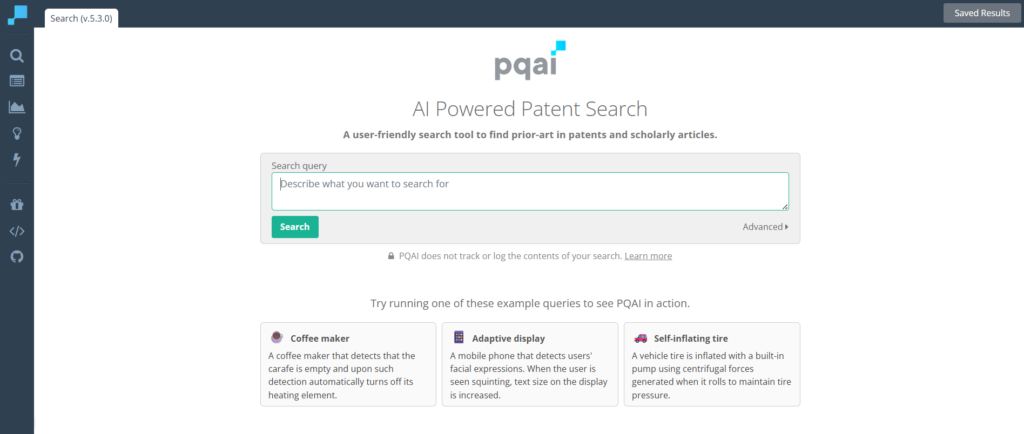
PQAI brought that plain-English experience to patent search back in the early 2020s, but with a system built specifically for prior art discovery.
Spearheaded by Sam Zellner, PQAI was created to make patent search simpler for inventors, researchers, and IP teams. Instead of learning Boolean operators or guessing the right patent keywords, users can describe an invention idea naturally and retrieve conceptually similar patents and technical literature.
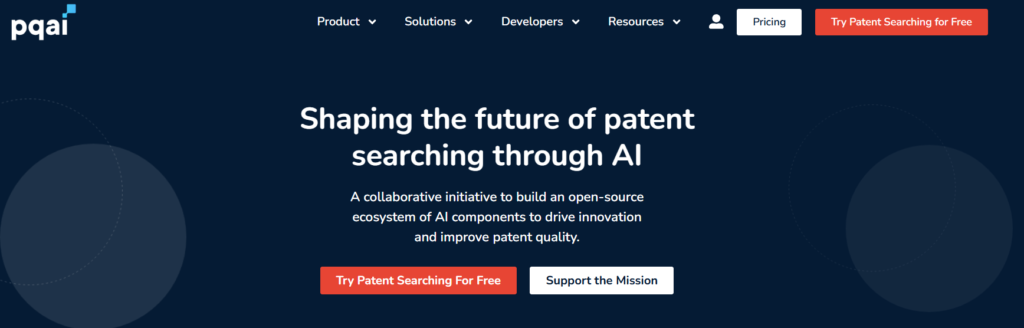
The AI-powered patent search platform searches semantically across patents from 68 major jurisdictions and more than 100 million research papers to surface inventions that may share the same underlying concept, even when the wording differs.
That matters because early prior art checks often fail when the search is limited to patent text alone. A similar idea may show up in a research paper, technical disclosure, or product datasheet from another jurisdiction.
PQAI also becomes more interesting when you look beyond the search interface.
For individual users, it works as a simple AI patent search tool for early-stage novelty checks and invention research. But for IP teams, legaltech startups, invention management platforms, and enterprise innovation teams, PQAI can also act as foundational IP infrastructure.
Its patent search API lets teams bring the power of PQAI’s semantic patent search into their own products, internal tools, custom GPTs, or agentic workflows.
Moreover, enterprises can also explore private deployment options when they need more control over data and workflows. Here are some of the features that make this AI patent search tool a strong fit for different invention search workflows.
PQAI’s real strength is that it does not leave users with just a list of similar patents. It comes with practical add-ons that make patent searching smarter, faster, and useful for both first-time inventors and advanced users.
These include:
CPC/IPC Lookup: PQAI can suggest relevant CPC and IPC classes based on a plain-English invention description. This makes it easier to narrow searches into the right technical areas without manually exploring classification systems.
Similar Keywords Finder: Patent language is rarely straightforward. The Similar Keywords tool helps users discover related technical terms, synonyms, and alternate phrasing connected to an invention idea.
Concept Extractor: Users can enter a long invention description, and PQAI automatically breaks it into core technical concepts. This helps focus searches around the most important inventive elements.
GAU Predictor: PQAI predicts likely USPTO Group Art Units based on the invention description and also shows examiner allowance trends. This gives inventors and IP teams additional context around how similar inventions are typically reviewed.
API Access and Private Deployment: Unlike many patent search tools that only offer only a web interface, PQAI also provides API access for organizations building internal patent intelligence workflows. Enterprises can additionally deploy PQAI on private infrastructure for greater security and data control.
PQAI is best suited for:
PQAI’s core patent search platform is free to use, reflecting our goal of keeping AI-powered prior-art search accessible. Our paid plans start at $20/month.
Users who want a chat-based patent search experience can choose PQAI+ at $49/month.
We also offer API plans for users who need higher API usage, with the Developer plan starting at $199/month and the Enterprise plan at $700/month.
You can get more information on our pricing page.
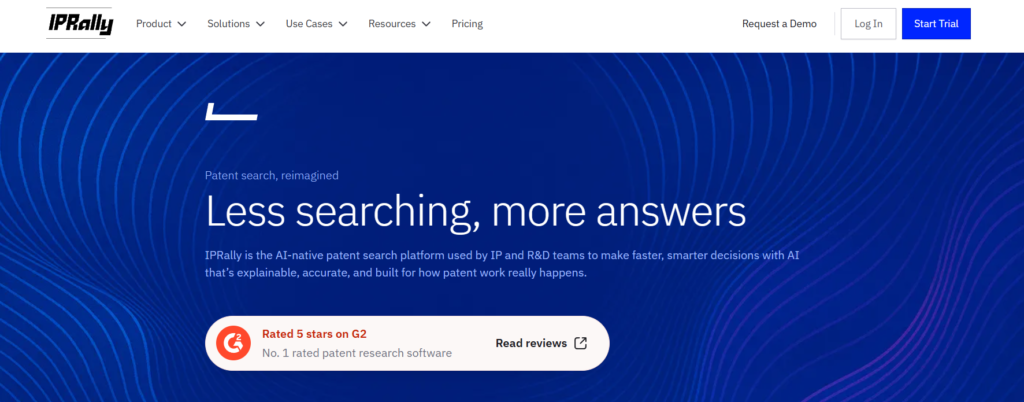
IPRally is an AI-native patent search platform built for IP and R&D teams that need to search, review, monitor, and analyze patents in one place.
The platform is built around its proprietary Graph AI, which helps users search patents by technical ideas instead of relying only on exact keywords. This makes it useful for patentability searches, invalidity searches, freedom-to-operate checks, competitor monitoring, and portfolio analysis.
Source – IPRally
IPRally covers more than 120 million patents and supports natural language search, publication-number search, image-based search, filters, relevance feedback, and team-based review workflows.
One of its newer capabilities is IPRally Agent, which helps automate novelty search from invention disclosures to a structured report. Users can upload text, PDFs, images, or Office documents, and the tool identifies key features, runs targeted searches, and creates a written search report with supporting results.
Best for: Patent professionals, IP teams, and R&D teams looking for AI-assisted patent search, review, monitoring, and portfolio analysis workflows.
Pricing: IPRally offers a 3-day free trial. You can reach out to their sales team for more information on paid plans.
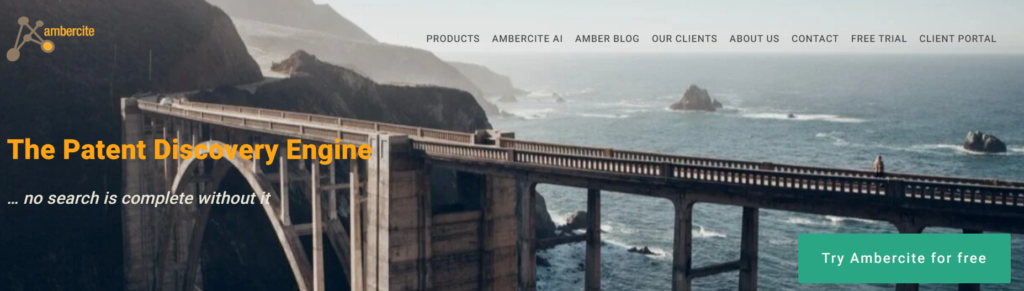
Ambercite is a patent discovery platform built around citation networks rather than keywords or semantics. Instead of asking users to start with the perfect search query, Ambercite works from one or more starting patents and looks at citation relationships to find similar documents.
This approach helps uncover prior art and portfolio insights that traditional keyword, semantic, or class-code searches may overlook.
Source – Ambercite
Ambercite highlights that it applies network analytics, AI, and deep learning to a global database of more than 175 million patent citations. The goal is to find patents that may not appear through conventional search methods, especially when the wording, classification, or translation differs.
The engine behind Ambercite powers its products, from Ambercite AI searches to AmberScope’s interactive visualizations, where users can explore clusters of related patents based on citation relationships.
For patent professionals already using standard patent databases, it can add another layer of confidence by surfacing documents that may be missed through keyword, semantic, or classification-based searching.
With smart review panes, family-to-family analysis, and representative images, the platform is designed to save time and reduce missed results.
Best for: Patent professionals, prior art searchers, and licensing teams who want a citation-based discovery method to complement their existing patent search workflow.
Pricing: Pricing is subscription-based, with a free trial and demo available. You can reach out to their team for more details.
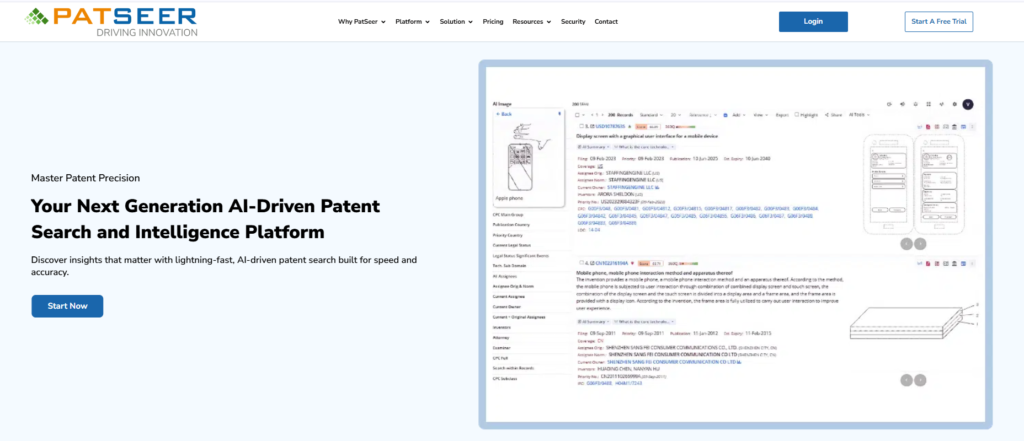
PatSeer positions itself as a hybrid AI+ expert search platform that combines Boolean and semantic search in one system.
Source – Patseer
Patseer lets users run full-text searches, apply advanced filters, or use AI to refine results, summarize documents, and recommend related patents. PatSeer also highlights PatAssist, its AI assistant for patent intelligence workflows.
For design patents, PatSeer supports AI-driven image similarity search, making it easier to compare drawings and visual features. It has also launched an AI-driven global industrial design database for teams working across both patent and design portfolios.
Its database covers global patents and industrial designs, enriched with value-added content and national classification data. PatSeer currently lists more than 172 million total records from 108 patent authorities, 134 million full-text records, and more than 70 million machine translations.
Alongside search, PatSeer offers analytics tools such as citation maps, co-occurrence matrices, trend charts, interactive dashboards, semantic mapping, and AI classification to support portfolio evaluation and technology landscaping.
Best for: Patent professionals, IP teams, R&D teams, and innovation teams that need a broad patent intelligence platform for search, analytics, monitoring, collaboration, and industrial design search.
Pricing: PatSeer offers multiple editions, including Premier, PremierPlus, ProX, Explorer, and Industrial Designs. You can contact their team for more information.
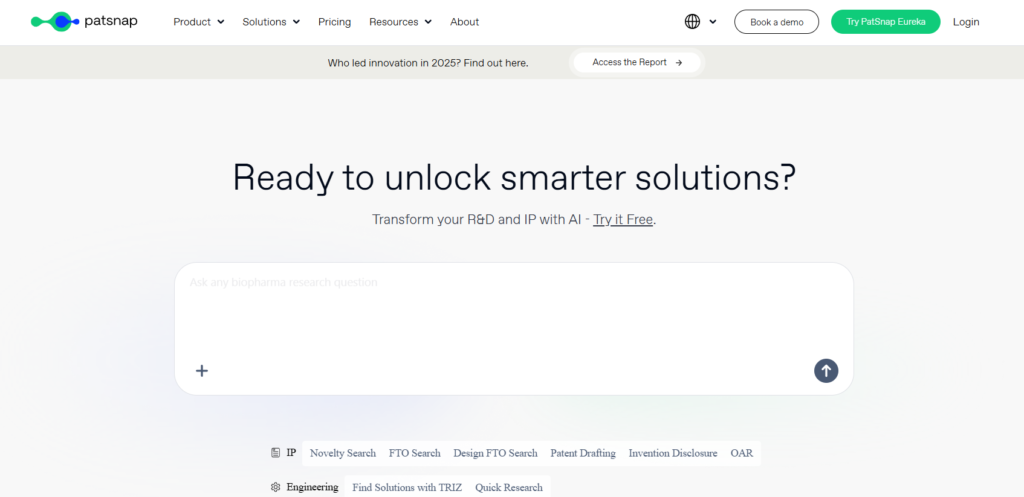
PatSnap Eureka is PatSnap’s AI-native platform for patent search and R&D intelligence.
Source – PatSnap
For patent search, Eureka is built around task-specific agents. Users can run novelty searches, FTO searches, and design FTO searches instead of starting with a broad search box and manually shaping every query from scratch.
The platform is built on PatSnap’s broader innovation dataset, which includes more than 208 million patents across 174 jurisdictions, 216 million literature records, and 1.62 billion data points.
For teams that want to bring PatSnap intelligence into their own systems, its Open Platform also supports integration through APIs, MCP, and UI widgets.
Best for: IP teams, patent attorneys, R&D teams, and enterprise innovation teams that need AI-powered novelty search, FTO search, design FTO, drafting support, and broader innovation intelligence in one system.
Pricing: PatSnap Eureka offers a free basic plan for searching. However, its Pro Patent Searching plan starts at $400/month, with custom pricing for the Enterprise plan and its open platform.
Recommended Read: Top 5 PatSnap API Alternatives for Enterprises
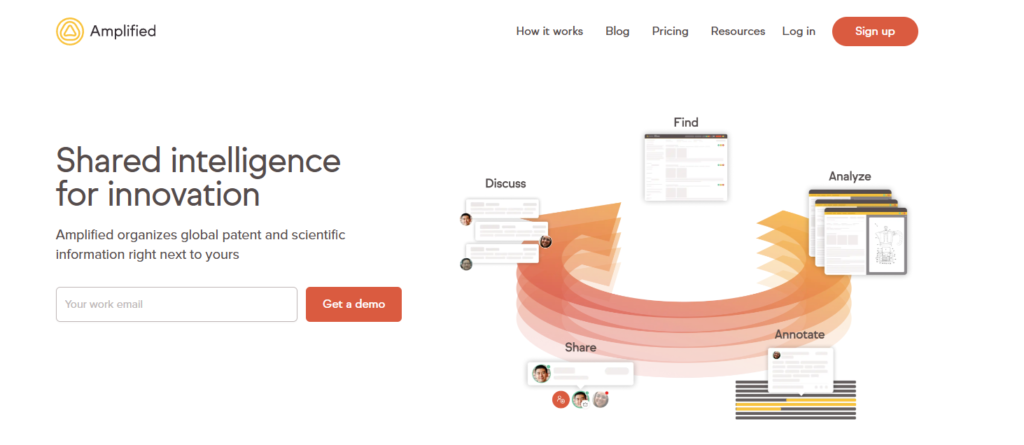
Amplified is an AI-powered patent search and research platform built for teams working with technical intelligence.
Its AI analyzes more than 140 million patents to help users find conceptually related results without building complex queries from scratch. Users can start with plain text, an invention disclosure, or an existing patent, and Amplified ranks relevant results based on document-level similarity.
Source – Amplified
Where Amplified becomes especially useful is in team-based research. The platform lets users annotate patents, share projects, discuss findings, manage invention disclosure workflows, and monitor patent activity from one place.
It also includes family data, citations, legal status information, English machine translations, Boolean filters, keyword highlighting, and weekly updates to global patent data.
Best for: R&D teams, innovation teams, and IP teams that want AI-powered patent search along with collaboration, invention disclosure workflows, monitoring, and internal knowledge management.
Pricing: Amplified starts at $500/month, when billed annually. Team pricing and enterprise options are available on request.
Cypris is built for IP and R&D teams that need patent search to answer bigger technology questions.
The platform connects patents with the broader innovation ecosystem, including research papers, chemicals, commercial data, market signals, and internal knowledge. This makes it useful for teams that need to understand not just whether an invention exists, but how that technology area is evolving.
Source – Cypris
For patent search, Cypris supports natural language search, advanced Boolean queries, semantic analysis, claim analysis, side-by-side comparisons, and automated reporting for prior art, FTO, and landscape analysis. It also offers AI agents for patentability searches, portfolio intelligence, IP monitoring, and patent drafting workflows.
Cypris lists access to more than 180 million patent documents, 270 million-plus research papers, and broader market and web data through its innovation database. Its AI combines frontier models with a proprietary IP ontology, so users can analyze claims, patent families, citations, and classifications with more relevant context.
Best for: R&D teams, in-house IP teams, external IP firms, and consultants who want patent search with broader technology and market context.
Pricing: Their pricing is not publicly listed. You can contact the Cypris team for subscription details.
Relecura is an AI-powered IP platform built for patent teams that need faster prior art search, portfolio mapping, and competitive intelligence.
For patent search, its Novelty AI product helps users run prior art, FTO, and invalidity searches across 170 million patent records from across 160 jurisdictions, non-patent literature, and optionally, private data. Relecura uses their proprietary relevance scoring to help users identify the most relevant results faster.
Source – Relecura
Beyond search, Relecura offers Taxonomy AI for mapping patents to R&D and product roadmaps, Patent Landscape for portfolio and whitespace analysis, and Assignment Analytics for tracking ownership changes and competitor activity.
That makes it useful for teams that want AI support across more than just novelty search. Relecura can also help with IP strategy, competitive benchmarking, due diligence, licensing, and litigation preparation.
Best for: IP teams, patent searchers, law firms, legal process outsourcing teams, and R&D-led companies that need prior art search, FTO, invalidity search, patent landscaping, and assignment analytics in one platform.
Pricing: Their pricing is not publicly listed. You can request a demo or contact Relecura for subscription details.
Also Read: Which Finds Better Prior Art: PQAI or Perplexity Patents?
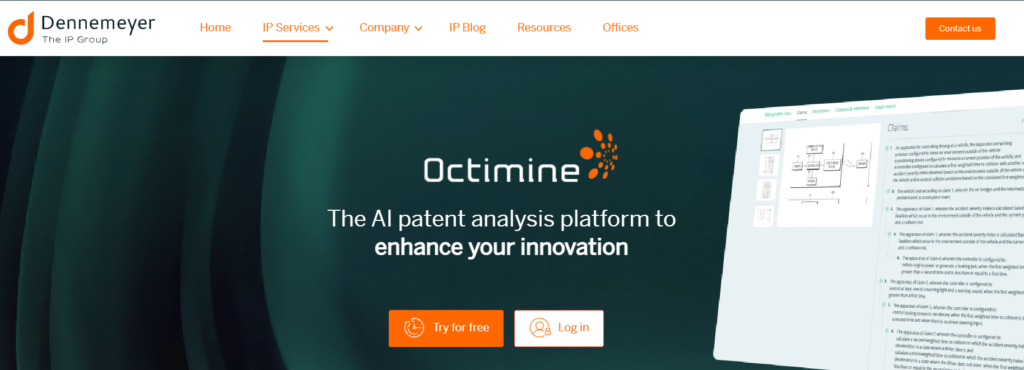
Octimine is an AI-powered patent search and analysis platform from Dennemeyer.
It combines Boolean search with AI-powered semantic search and deep learning, helping users retrieve relevant prior art without relying on one search method alone.
The platform gives users access to more than 150 million patents and 210 million non-patent literature documents. It supports prior art search, landscape analysis, competitor monitoring, portfolio review, and patent analytics.
Source – Octimine
Octimine also includes monitoring features that help teams track new publications, legal status changes, and competitor activity in specific technology areas.
For teams that want to connect patent data to their own tools or content platforms, Octimine also offers API access, so you can integrate its patent data wherever you want.
Additionally, its built-in analytics provide interactive visualizations, while collaboration features let teams share annotations, assign tasks, and store results centrally.
Best for: Patent searchers, IP teams, R&D teams, and organizations that need AI-powered patent search, monitoring, analytics, collaboration, and API access in a single system.
Pricing: Octimine offers a limited free trial and demo options. Their full access is subscription-based, but exact pricing is not publicly disclosed. You can contact Octimine’s team for more details.
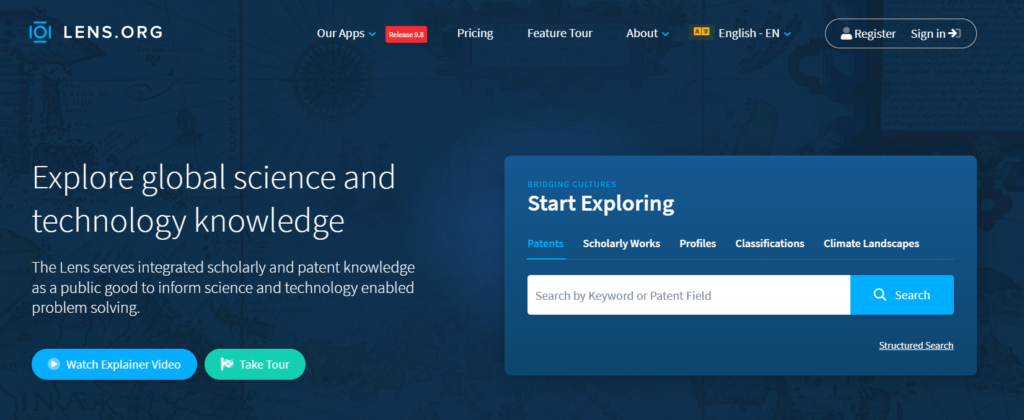
The Lens is an open platform that combines patent and scholarly data in a single searchable interface. The platform gives users access to more than 171 million patent records, 313 million scholarly works, 91 million open-access works, and 550 million biological sequences.
The platform supports Boolean search, structured patent search, classification search, biological search, filtering, sorting, and patent analysis. It also helps users explore the relationship between patents, scholarly works, authors, applicants, owners, citations, and biological sequences.
Source – The Lens
Users can also create, annotate, and share collections of patent and scholarly records, making the AI-powered platform useful for collaborative research, portfolio tracking, and technology mapping.
The Lens also offers patent API and scholarly API access through trial or add-on options, depending on the account type.
Best for: Researchers, universities, inventors, analysts, and organizations that need open patent and scholarly search with collections, citation mapping, biological sequence search, and optional API access.
Pricing: The Lens offers open public access for free. It also offers academic workspaces for free, while professional accounts cost $1,000 per year. Institutional toolkits start at $2,000, and Enterprise toolkits start at $5,000. API access and bulk data are available as trial or add-on options, depending on the plan.
Read next: Looking for Lens.org Alternatives? Here Are 6 Options Worth Exploring
Now that we’ve looked at these top patent search platforms, let’s look at how to choose the right one for your needs.
Prior art search has become easier than ever, but that does not mean every tool is the right fit for every search.
Some tools are built for quick invention checks, whereas others are better suited for patent attorneys running FTO or invalidity searches.
There are even some tools on this list that are useful for R&D teams that need to search for prior art across research papers, biological sequences, chemical data, and other technical sources.
Before committing to a tool, look at three things:
If you are only checking whether an idea already exists, you may need a simple plain-English search tool. But if you are running FTO, invalidity, design patent search, portfolio analysis, or competitive monitoring, you need a platform built for that workflow. The best AI patent search tool is not the one with the most features. It is the one that fits the search you are actually trying to run.
Patent records are important, but they may not be enough. Depending on your industry, relevant prior art may appear in research papers, technical disclosures, product literature, chemical data, biological sequences, or patent filings from another jurisdiction. Before choosing a tool, check whether its database matches your technology area and search depth.
A good AI patent search tool should help you move from a rough idea to a useful decision. That could mean saving results, sharing projects, exporting reports, setting alerts, reviewing claims, or integrating search through an API. For larger teams, privacy, private deployment, and workflow integration can matter just as much as the search itself.
Answering these questions can help you choose a tool that does more than return patent results. It can help you find the right fit for your use case.
And if you are looking for an AI patent search tool that can surface semantically relevant prior art while also offering API access, PQAI is a strong choice to consider. Here’s why.
Ease of use matters in patent search, but relevance matters more. A tool can feel simple, return results quickly, and still miss the prior art that actually matters. That is why independent evaluation is useful, especially in a space where many AI patent search tools now promise faster and better results.
In an independent analysis published by the French publication BASES, François Libmann reviewed 14 AI-assisted patent search tools to see how well they could respond to natural-language patent search queries and retrieve relevant documents.
In that evaluation, PQAI ranked #2 for its ability to retrieve relevant prior art.
That ranking matters because it speaks to the core job of an AI patent search tool: not just making search easier, but helping users find prior art references that are actually relevant to the invention being checked.
For inventors, startups, and researchers, PQAI offers a simple way to run early-stage invention checks without writing complex Boolean queries. For IP and enterprise innovation teams, it also offers API access and private deployment options for building patent search capabilities into their IP workflows.
So whether you are checking the novelty of an idea or building a more structured patent intelligence workflow, PQAI gives you a practical place to start. Try our PQAI Search Platform today.
Disclaimer: This article is based on information available in publicly accessible sources, including official product pages, API documentation, pricing pages, and related public materials available at the time of writing. All product names, company names, logos, trademarks, and brand assets mentioned or shown belong to their respective owners and are used here for identification and comparison purposes only. We do not claim ownership over any third-party brands, images, or trademarks referenced in this article.

At PQAI, we bring clarity to the world of patents. Through storytelling and insight, we simplify inventions so innovators, researchers, and businesses can learn from the past and build the future.
In one of our earlier articles, we shared how PQAI can be used for invalidity searches. A little before that, we had also conducted a

PQAI is a popular tool among inventors for conducting novelty searches. You can describe an invention in plain language, and its semantic search capabilities can
People ask us a version of the same question all the time. How good is PQAI, really? It is a fair question, and a hard